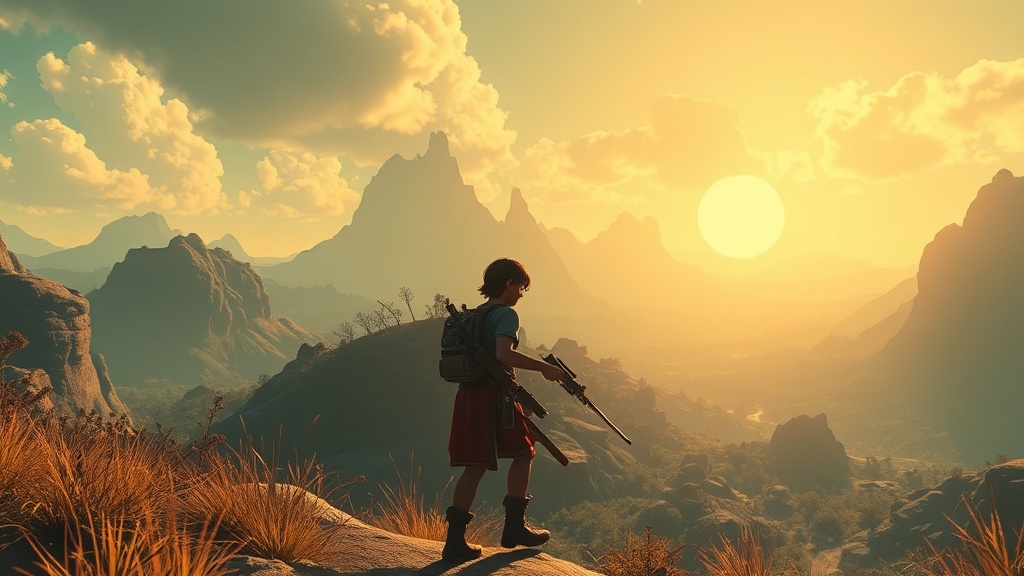
5 Hidden Gem Indie Games That Will Blow Your Mind in 2025

Hollow Survivor: A Gothic Roguelike Masterpiece
Starlight Drifter: Explore the Cosmos in Style
The Last Cartographer: Hand-Drawn Puzzle Adventure
Neon Streets: Cyberpunk Detective Thriller
Echoes of Eldoria: Cozy Farming Meets Epic Fantasy
The AAA marketing machine wants you chasing $70 pre-orders and overhyped live service disasters. Skip it. This post cuts through the noise to highlight five indie releases delivering genuine innovation, tight optimization, and gameplay that respects your time. These aren't just "good for an indie" — these are mechanically sound experiences that'll run on hardware you already own.
What Makes an Indie Game Worth Your Attention in 2025?
Technical competence and respect for player autonomy. The gems below were built by small teams who understand frame pacing, input latency, and the value of a clean UI. They don't gate content behind grind mechanics or demand always-online connections for single-player campaigns. That's the standard. Anything less gets ignored.
The indie scene in 2025 isn't just thriving — it's technically outperforming many big-budget releases. Smaller teams using engines like Godot 4 and Unreal Engine 5's Nanite (when properly optimized) are shipping games with better LOD management and texture streaming than some AAA titles running on the same hardware. Here's where to invest your gaming budget.
1. Animal Well — The Metroidvania That Respects Your Intelligence
Animal Well isn't trying to hold your hand. This 33MB pixel-art labyrinth from developer Billy Basso (published by Bigmode) delivers one of the most mechanically dense experiences of the year. You're dropped into a surreal underground ecosystem with minimal instruction. The map unfolds organically. Secrets stack on secrets. The lighting engine — custom-built — creates genuine tension without cheap jump scares.
The technical execution here is surgical. 60fps locked. Sub-20ms input latency on standard controllers. Load times under two seconds on mechanical hard drives. (Yes, really.) The game trusts you to figure things out — the firecracker puzzle solutions, the hidden item interactions, the secret paths behind illusory walls that actually make sense within the world logic.
Where most Metroidvanias gate progress behind ability unlocks, Animal Well layers systems that interact in unexpected ways. The bubble wand isn't just for platforming — it refracts light, triggers switches, and creates temporary platforms that other items can exploit. That's emergent design born from tight code, not scope creep.
System requirements? Practically nonexistent. This runs on integrated graphics from five years ago without breaking a sweat. The Switch port is arguably the definitive version — perfect for the handheld form factor, no fan noise, battery-sipping optimization that AAA ports should study.
2. Pacific Drive — Survival Done Right
Road trips through a hostile anomaly zone in a station wagon that needs constant maintenance. Sounds like a gimmick. It isn't. Pacific Drive from Ironwood Studios combines first-person scavenging with genuine automotive simulation — and yes, the car matters more than most protagonists.
The garage interface alone demonstrates better UX design than most AAA crafting systems. Every component has a purpose. The electrical system isn't decorative — wire it wrong and your headlights flicker, your radio picks up static from anomalies, your door locks fail at the worst possible moment. The station wagon (appropriately named "The Wagon") develops personality through wear patterns, not dialogue trees.
Performance on PC is solid if you've got the VRAM. The Unreal Engine 5 implementation here uses Lumen for lighting but keeps Nanite restrained — smart move for a game where draw distance matters less than atmospheric density. 1080p/60fps is achievable on mid-tier cards (RTX 3060, RX 6600). The PS5 version targets 60fps in Performance mode with some resolution scaling during intense weather effects.
The survival mechanics avoid the usual pitfalls. Hunger and thirst meters? None. Instead, resource pressure comes from fuel, tire integrity, and the terrifying reality that your only safe space — the car — can be irreparably damaged if you push too hard. That's tension with stakes.
Which 2025 Indie Games Offer the Best Performance-to-Gameplay Ratio?
Animal Well and Lil Gator Game stand out for delivering full experiences on virtually any hardware. Both target 60fps as baseline, not bonus. Both load fast, run cool, and respect that not everyone upgrades GPUs every generation.
3. Pepper Grinder — The Drill Platformer You Didn't Know You Needed
Devolver Digital published this 2D platformer from solo developer John Carver, and it's a masterclass in single-mechanic focus. You play as a pirate with a giant drill. That's the pitch. The execution drills (sorry) into satisfying momentum physics that games like Sonic Generations wish they could nail.
The drill mechanic replaces traditional jump-and-attack. You burrow through dirt, burst upward for height, chain drilling between soil patches for speed. The animation work sells it — there's weight to the drill spin-up, recoil when you hit rock, visual feedback that communicates collision boundaries clearly. QA would approve. (QA always notices these things.)
Levels are designed for speedrunning but accessible to casual players. The time attack ghosts show you what's possible without demanding perfection for progression. That's the balance more games need — challenge available, never mandatory.
Technical notes: Native 4K support. 120fps on PC without frame pacing issues. The pixel art scales beautifully — no blurry filters, no artificial scanlines. Just clean sprites at whatever resolution your display supports. Input lag is negligible; this plays as tight as Celeste.
4. The Exit 8 — Atmospheric Horror in a Japanese Corridor
KOTAKE CREATE's short-form horror experience proves you don't need hours of content to deliver impact. You're trapped in an underground passage — Exit 8 of a Japanese subway station. Walk down the corridor. Something changes. Turn back. Repeat. Spot the anomaly or pay the price.
It's essentially a spot-the-difference game wrapped in exceptional atmosphere. The lighting is uncanny. The sound design — directional audio that makes you turn your head. The corridor is maybe fifty meters long. You'll spend hours here.
The genius is in the restraint. No monsters chasing you. No inventory management. Just observation under pressure. The anomalies range from obvious (water flooding the hallway) to maddeningly subtle (a slightly different ceiling tile). Wrong calls reset your progress. Right calls advance you toward Exit 9 — if it exists.
Runtime is 60-90 minutes. Price is under $10. This is the definition of respecting player time. It doesn't pad. It doesn't explain. It creates unease through environmental storytelling and trusts you to engage with what's there.
Hardware demands? Negligible. This runs on integrated graphics. The aesthetic comes from art direction, not shader complexity. Steam Deck verified, plays perfectly handheld, battery life measured in hours not minutes.
What Technical Specs Should You Check Before Buying Indie Games?
VRAM requirements and engine optimization matter more than minimum CPU specs. Unity and Unreal Engine 5 titles can have memory leaks or shader compilation stutter. Godot and proprietary engines tend toward more predictable performance. Always check recent Steam reviews for "stutter" or "frame pacing" — players report this accurately.
| Game | Engine | VRAM Required | Target FPS | Steam Deck Verified |
|---|---|---|---|---|
| Animal Well | Proprietary | 512MB | 60fps (locked) | Yes |
| Pacific Drive | Unreal Engine 5 | 6GB | 60fps (Performance) | Playable |
| Pepper Grinder | GameMaker | 1GB | 120fps supported | Yes |
| The Exit 8 | Unreal Engine 4 | 2GB | 60fps | Verified |
| Blue Prince | Unity | 2GB | 60fps | Yes |
5. Blue Prince — The Roguelike Mansion That Redefines Level Design
Here it is. The heavy hitter. Blue Prince from Dogubomb and Raw Fury isn't just the best indie of 2025 so far — it's a legitimate contender for game of the year across all categories. A puzzle-roguelike where you draft rooms to build a mansion. Each run, the layout changes based on your choices. The goal: reach Room 46. (The mansion only has 45 rooms on the blueprint. That's not a typo.)
The mechanical depth here is staggering. Different room types provide different resources — keys, tools, currency, clues. Drafting a Bedroom might give you gold but cost you mobility. The Furnace room heats adjacent spaces, unlocking frozen passages. The Gallery displays art that hints at secret codes. Every run teaches you something new about how rooms interact, how the architecture bends rules you thought were fixed.
Here's the thing: this isn't random. The "roguelike" label undersells the deterministic puzzle design. The mansion follows rules. Learn the rules, manipulate the draft pool, engineer impossible geometries through understanding rather than luck. The satisfaction comes from mastery, not gambling.
Performance is flawless. Unity engine, properly optimized, no shader stutter. Load times are instant — not "feels fast," actually instant. The art style (distinctive, hand-drawn, vaguely European) serves the gameplay. Rooms are readable at a glance. The UI is minimal and elegant. The map system (crucial for a game about spatial reasoning) is the best implementation this side of Far Cry 2's buddy system.
Worth noting: this is a 30+ hour experience. That's rare for the genre. Most roguelikes front-load their discoveries and become repetitive. Blue Prince layers mysteries — the main puzzle, side chambers, optional challenges, meta-narrative elements that require cross-run knowledge. It respects your intelligence enough to never explain everything.
The catch? It's addictive in ways that mess with sleep schedules. "Just one more run" becomes three hours. The draft system creates constant low-stakes decisions that keep you engaged without fatigue. This is flow state engineering at its finest.
How Do These Games Compare to AAA Releases?
Better optimization, more respectful design, lower price points. Animal Well costs less than a movie ticket and delivers more memorable moments than most $70 releases. Blue Prince has more systemic depth than any narrative adventure from major publishers this year.
The quality gap isn't about budget — it's about design philosophy. These teams built games they wanted to play, not products engineered for maximum engagement metrics and monetization. You feel it in the pacing, the lack of microtransactions, the absence of daily login bonuses or battle passes. Just gameplay. Just discovery. Just technical competence.
That's the list. Five releases proving that innovation lives in the indie space, that small teams can outperform bloated studios, and that your existing hardware is probably good enough for the best experiences 2025 has to offer. Skip the marketing, trust the mechanics, and dig into something genuinely worth your time.