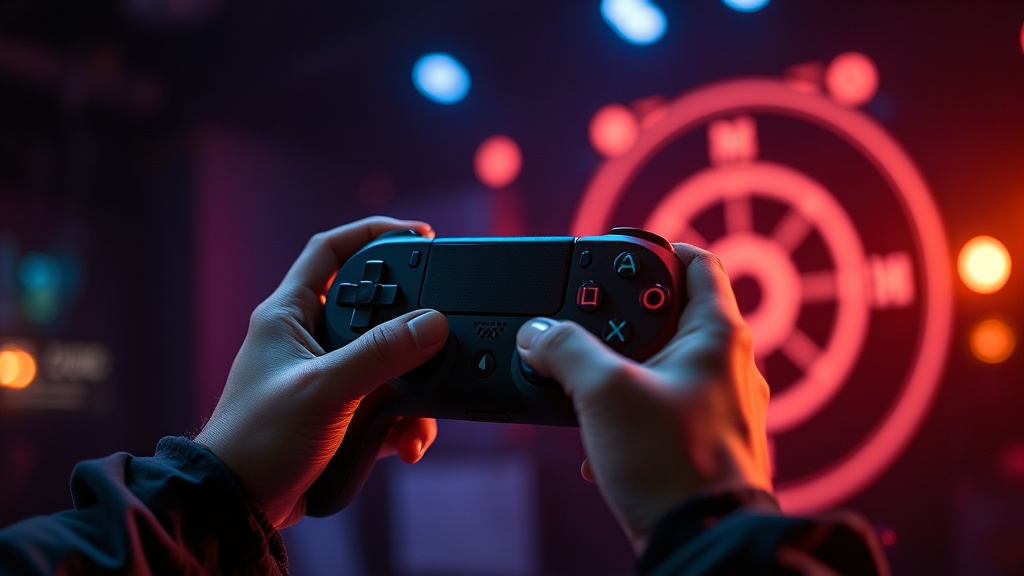
Mastering Your Controller: The Secret to Better Aim

Quick Tip
Lower your sensitivity slightly to gain much more precise control over micro-adjustments during combat.
The Hardware Truth: It’s Not Your Skill, It’s Your Input Lag
Most players blame a "bad game" or "unlucky RNG" when they miss a shot. As a former QA lead, I can tell you that more often than not, the culprit is a combination of suboptimal settings and uncalibrated hardware. If you want to master your aim, you need to stop looking at the screen and start looking at your connection to the machine.
Step 1: Eliminate Stick Drift and Deadzone Latency
If you feel like your crosshair is drifting slightly to the left even when you aren't touching the stick, you have stick drift. This is a mechanical failure of the potentiometer, and no amount of "practice" will fix it. However, you can mitigate it through software.
Go into your game's controller settings and adjust your deadzone. A smaller deadzone allows for faster reaction times, but if it's too low, your micro-movements will become erratic. Find the "sweet spot" where the stick remains stable at rest but responds instantly to your touch. If you are dealing with hardware degradation, it might be time for a replacement, much like how you would prioritize high-quality audio components to ensure your entire setup is optimized.
Step 2: Optimize Your Input Pipeline
Precision isn't just about the thumb; it's about the signal. To achieve professional-grade aim, follow these technical requirements:
- Use a Wired Connection: Even with "low latency" Bluetooth, wireless interference is a reality. A USB-C wired connection provides the most consistent polling rate.
- Check Your Polling Rate: If you are using a high-end pro controller, ensure your PC or console is actually receiving the full frequency of inputs.
- Monitor Frame Consistency: Aiming is significantly harder if your frame pacing is inconsistent. Even if your average FPS is high, micro-stutters can ruin a flick shot. This is often caused by poorly optimized assets or unoptimized AI NPC performance eating up your CPU cycles.
Step 3: The Muscle Memory Fallacy
Stop chasing "sensitivity" numbers and start understanding acceleration curves. Most modern shooters use a non-linear response curve. To truly master your aim, you must practice in a controlled environment where the variables don't change.
"Precision is the byproduct of consistency. If your hardware is fighting you, your muscle memory will never be able to build a reliable baseline."
Don't let marketing hype convince you that a new $200 controller will magically make you a pro. Fix your deadzones, stabilize your frame rates, and respect the technical limitations of your gear. That is how you actually get better.