Why You Should Start a Physical Retro Gaming Collection

The most dangerous misconception in modern gaming is that digital ownership is the same as permanent access. Many players believe that because they purchased a title on Steam, the PlayStation Store, or Xbox Live, they "own" that software. In reality, you are merely purchasing a revocable license to access that content. If a server goes offline, a digital storefront is delisted, or a licensing agreement for in-game music expires, your library can vanish instantly. This guide outlines why building a physical retro gaming collection is a practical hedge against digital volatility and how to approach it with a technical mindset focused on preservation and hardware longevity.
The Fragility of Digital Libraries
Digital-only libraries are subject to the whims of platform holders and the decay of server-side infrastructure. We have already seen numerous instances where digital-only titles became unplayable due to server shutdowns or changes in platform architecture. When you rely solely on a digital account, you are outsourcing your ability to play your favorite games to a third party. A physical cartridge or disc, however, is a self-contained unit of data that functions independently of an active internet connection or a centralized server.
Consider the longevity of a Nintendo 64 cartridge versus a modern digital download. The N64 cartridge contains the entire game data on a physical ROM chip. As long as the hardware can read the chip, the game remains playable. In contrast, a modern game that requires a "phone home" DRM (Digital Rights Management) check will fail to launch if the developer's authentication servers are decommissioned. By collecting physical media, you are investing in a version of the software that is not tethered to a proprietary cloud service.
Hardware Reliability and the Physical Medium
From a technical standpoint, different physical media present different maintenance requirements. As someone who spends a significant amount of time repairing hardware, I can tell you that understanding the medium is the first step to a successful collection. You aren't just collecting games; you are managing a set of physical assets that require specific environmental conditions to survive.
Cartridges vs. Optical Discs
Cartridges, particularly those from the 8-bit and 16-bit eras like the NES, SNES, or Sega Genesis, are remarkably resilient. They utilize non-volatile memory, meaning the data stays put even without power. The primary failure point for cartridges is the contact pins. Oxidation on these pins can lead to "dirty" reads or failure to boot. This is easily remedied with 90% or higher Isopropyl Alcohol and a lint-free swab. If you are buying older cartridges, always check the pins for greenish corrosion or heavy buildup.
Optical media, such as PlayStation 1 or Sega Saturn discs, presents a different set of challenges. These are susceptible to "disc rot"—a chemical breakdown of the reflective layer—and physical scratches that cause read errors. When collecting optical media, prioritize "Gold" or high-quality pressings over burned CD-Rs, which degrade much faster. If you encounter a disc with minor surface scratches, a specialized polishing compound can sometimes restore readability, but this is a temporary fix for a physical degradation issue.
The Role of Emulation and Accuracy
While emulation is a powerful tool for accessibility, it is often a compromised experience. Most emulators, even high-end ones like RetroArch or specialized FPGA hardware like the MiSTer FPGA, struggle with perfect cycle accuracy. You may notice slight latency in input, inaccuracies in shader application, or subtle audio glitches that weren't present on the original hardware. For players who demand the exact frame-timing and input lag of the original machine, physical hardware remains the only way to achieve a 1:1 experience.
Building a Collection: A Strategic Approach
Do not start by buying everything that looks interesting. A haphazard approach leads to a cluttered shelf of low-value items and a depleted budget. You need a curation strategy based on value, rarity, and technical stability.
- Identify Your Core Systems: Pick one or two systems to master. If you want to focus on the 16-bit era, learn the nuances of the SNES and the Sega Genesis. Each has different hardware quirks and a different market value.
- Prioritize "Complete in Box" (CIB): While loose cartridges are cheaper, a CIB copy includes the original manual and packaging. This preserves the historical context of the game and holds significantly higher resale value.
- Audit the Condition: When buying from secondary markets like eBay or local game shops, look at high-resolution photos of the actual item, not stock photos. Check for label peeling, battery death (in games like Pokémon that use internal CR2032 batteries), and disc surface integrity.
- Invest in Maintenance Tools: Before you buy your tenth game, buy a kit. You need high-purity Isopropyl Alcohol, cotton swabs, a specialized contact cleaner, and perhaps a handheld vacuum for dust removal.
The Economic Reality of Retro Gaming
The market for retro games is no longer a "garage sale" economy; it is a sophisticated collector's market. Prices for high-demand titles from the Nintendo 64 or PlayStation 2 eras have seen significant inflation over the last five years. To avoid overpaying, you must use data. Sites like PriceCharting or specialized auction tracking tools are essential. If a game is listed at a price significantly above its recent average, it is likely a speculative markup rather than a fair market value.
One way to mitigate cost is to focus on "underrated" hardware. While everyone is fighting over the price of a PlayStation 2, the Sega Saturn or the Dreamcast often offer incredible libraries at a more reasonable entry point. These systems also provide a deep dive into unique hardware architectures, which is often more rewarding for those interested in the technical evolution of gaming.
Preserving the Experience
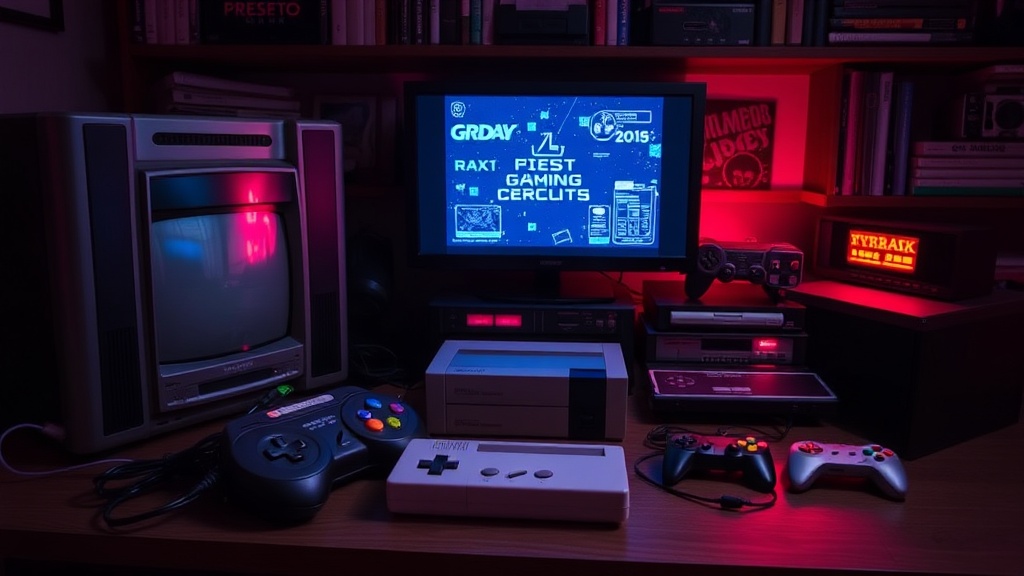
A physical collection is more than just a way to play games; it is a way to preserve the history of the medium. When you play a game on original hardware, you are interacting with the intended hardware-software synergy. The way a CRT television renders the scanlines of a Super Nintendo game is fundamentally different from how a modern 4K OLED handles those same pixels. The "look" of the game is tied to the hardware it was built for.
If you want to truly honor the original intent of these developers, consider investing in a high-quality upscaler or a dedicated CRT monitor. Devices like the Retrotink-5X or the OSSC (Open Source Scan Converter) allow you to bridge the gap between legacy hardware and modern displays without losing the sharp, authentic signal. This level of dedication ensures that the technical precision of the original developers is not lost to the "blur" of modern digital scaling algorithms.
Building a collection requires patience, technical knowledge, and a willingness to deal with the physical realities of aging hardware. However, the reward is a library of games that you actually own—a library that will remain playable long after the digital storefronts have been shuttered and the servers have gone dark.