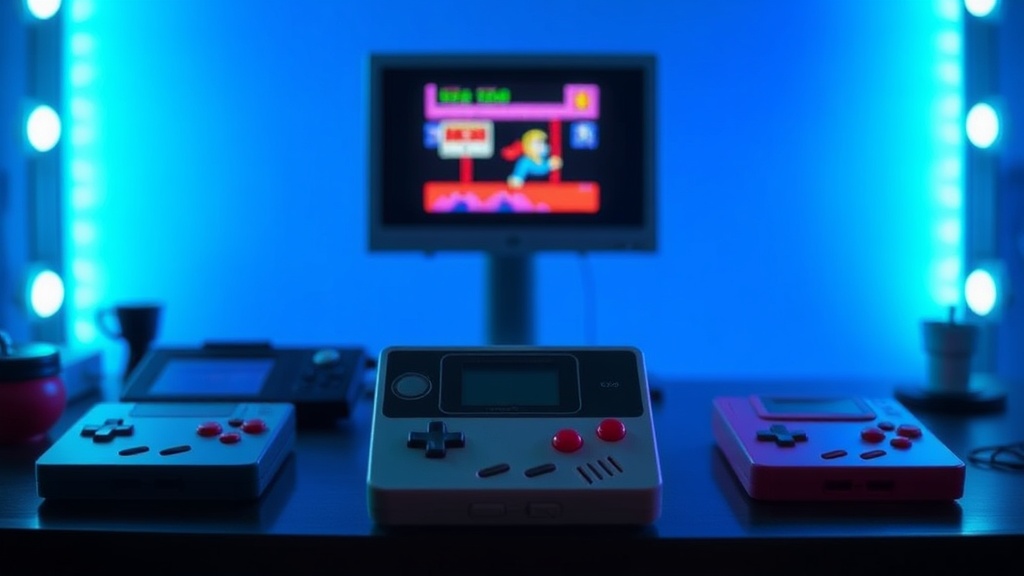
Why You Should Start Collecting Vintage Handheld Consoles

The Tactile Satisfaction of Physical Buttons
Preserving Gaming History for the Future
The Unique Charm of Small Form Factor Design
Are you tired of watching your digital library disappear behind expiring licenses and subscription tiers? While modern gaming focuses heavily on cloud saves and "live service" models, a growing movement of enthusiasts is turning back to physical, dedicated hardware to secure their gaming history. This post examines the technical, practical, and preservation-based reasons to begin collecting vintage handheld consoles, ranging from the 8-bit era to the early mobile revolution.
The Reliability of Dedicated Hardware
Modern gaming is increasingly reliant on a fragile ecosystem of high-speed internet, proprietary launchers, and server-side authentication. If a developer decides to shut down a server or a storefront closes, your "ownership" of a digital title becomes questionable. Vintage handhelds like the Game Boy Color or the Nintendo DS Lite operate on a completely different principle: local execution. When you insert a physical cartridge into a Game Boy Advance SP, the code is being read directly from the ROM chip. There is no handshake required with a central server, no firmware update that breaks compatibility, and no requirement for a stable Wi-Fi connection.
From a technical standpoint, this hardware is remarkably stable. Unlike a modern smartphone or a high-end Steam Deck that requires constant OS updates and driver management, these devices are static. Once a device is functioning correctly, its operational parameters do not change. This makes them excellent tools for focused gaming sessions where you want to avoid the distractions of notifications, social media, or the temptation to switch to a different application. For those who value a single-purpose device, the hardware simplicity is a feature, not a limitation.
Understanding Hardware Longevity and Repairability
One of the biggest advantages of collecting older handhelds is the transparency of their architecture. Modern consoles are often "black boxes" with soldered components and proprietary screws designed to prevent user intervention. In contrast, many vintage handhelds are highly modular. If you pick up a Sony PSP (PlayStation Portable), you are dealing with a device where the battery, screen, and even the UMD drive are relatively accessible to someone with a basic set of precision screwdrivers and a soldering iron.
As someone who spends significant time diagnosing hardware failures, I can tell you that the "planned obsolescence" found in modern tech is almost non-existent in the 1990s and early 2000s handheld market. Most issues you will encounter are predictable and fixable:
- Capacitor Leakage: Older devices may suffer from leaking electrolytic capacitors that can corrode the PCB.
- Battery Degradation: Lithium-ion or NiMH batteries eventually lose their capacity, but these are easily replaced with modern third-party alternatives.
- Screen Burn or Dimming: Many systems, such as the original Game Boy, can be upgraded with modern IPS LCD kits to provide better brightness and viewing angles.
- Button Fatigue: Conductive rubber pads can wear down, but they are inexpensive and easy to replace.
The Superiority of Tactile Input and Form Factor
While mobile gaming on a smartphone or a tablet offers convenience, it fails to match the ergonomic intentionality of a dedicated handheld. A device like the Nintendo Game Boy Advance was designed specifically around the physical layout of its games. The buttons are placed where your thumbs naturally rest, and the tension of the D-pad is calibrated for the specific genres of that era. There is a tactile feedback in a physical button press that a glass touchscreen cannot replicate.
Furthermore, the form factors of vintage handhelds offer a variety of experiences that modern "one-size-fits-all" mobile gaming lacks. You have the ultra-portable 1-handed play of a Game Gear, the dual-screen multitasking of a Nintendo DS, and the high-fidelity multimedia capabilities of a PSP. Each of these devices dictates a specific way of interacting with software, which in turn influences the game design. Collecting these devices allows you to experience how hardware constraints actually shape the creativity of developers.
Building a Physical Archive
As digital storefronts continue to undergo massive shifts, the concept of a "permanent collection" is becoming harder to maintain. We have already seen how digital-only libraries can be subject to sudden changes. This is why many enthusiasts are starting to start a digital archive of their physical media to complement their hardware collections. By owning the physical cartridge or disc, you own the actual data. Even if the original manufacturer ceases support, the hardware remains a functional vessel for that data.
Collecting vintage handhelds is not just about nostalgia; it is about digital preservation. When you maintain a Game Boy or a Neo Geo Pocket Color, you are acting as a custodian of a specific era of software engineering. You are ensuring that these experiences remain playable on their intended hardware, rather than relying on potentially inaccurate emulations that might struggle with frame timing or input latency. For the serious enthusiast, there is a profound satisfaction in knowing that your collection is entirely under your control.
How to Start Your Collection Without Overpaying
If you are looking to enter this market, avoid the "collector's premium" found on high-end auction sites. Many people make the mistake of buying "complete in box" (CIB) items immediately, which can be prohibit的に expensive due to the scarcity of original packaging. Instead, focus on the hardware and the software separately. This allows you to prioritize functional, playable units over aesthetic perfection.
- Buy "For Parts" Units: If you have any interest in basic soldering or component replacement, buying broken units on sites like eBay is a highly cost-effective way to build a library.
- Test the Battery Terminals: When buying older handhelds, always check the battery compartment for corrosion. This is the most common reason for "dead" devices, and it is usually an easy fix.
- Verify the Screen: Look for "dead pixels" or backlight bleeding. On older LCDs, this is a common issue that can be difficult to repair without a full screen replacement.
- Source Software Locally: Local thrift stores and garage sales are much more likely to have unpriced, undervalued handheld games than specialized gaming retailers.
Building a collection of vintage handhelds requires a shift in mindset. You have to stop looking at gaming as a service and start looking at it as a collection of physical artifacts. Whether you are interested in the technical challenge of repairing a Game Boy Advance or the simple joy of playing a classic RPG on its original hardware, the move toward vintage handhelds is a move toward true ownership and long-term gaming stability.