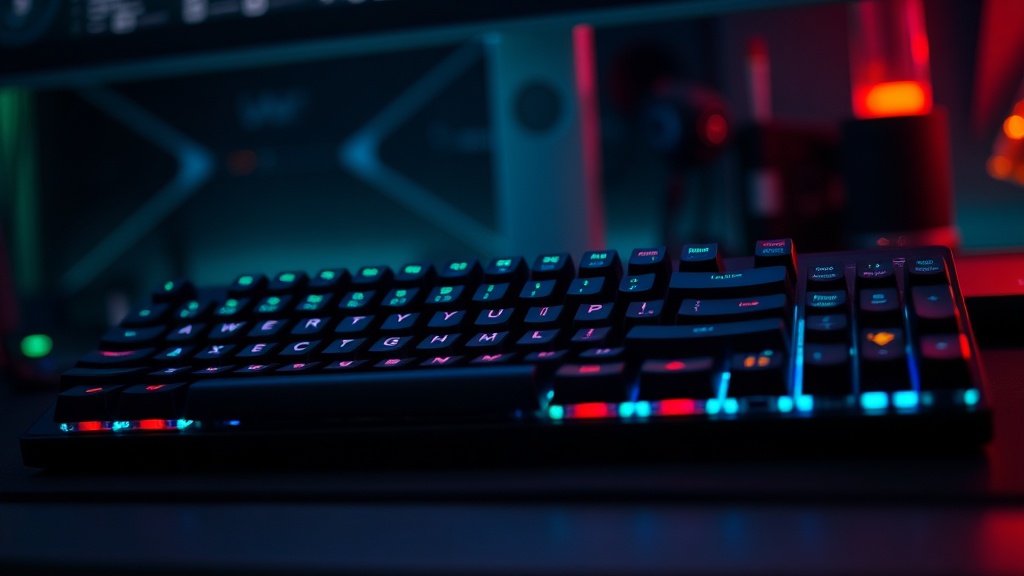
Why You Should Use a Mechanical Keyboard for Gaming

Quick Tip
Mechanical keyboards offer better tactile feedback and durability compared to standard membrane keyboards.
The Technical Advantage of Mechanical Switches
You are mid-clutch in a high-stakes round of Counter-Strike 2. You attempt to counter-strafe to stop your momentum, but the keypress feels mushy, the actuation is delayed, and your character fails to respond in time. This isn't a latency issue with your internet; it is a hardware limitation of your membrane keyboard. Standard membrane keyboards rely on a rubber dome that requires a significant amount of force to compress, often leading to "ghosting" or missed inputs during rapid key sequences. Switching to a mechanical keyboard solves this by using individual physical switches for every single key, providing the precision required for competitive play.
Reliability and Actuation Precision
The primary reason to invest in mechanical hardware is the consistency of the actuation point. Unlike membrane boards, where you have to bottom out the key to ensure a signal is sent, mechanical switches offer a predictable tactile or linear response. This is critical for genres that demand high APM (Actions Per Minute), such as StarCraft II or League of Legends.
- Linear Switches (e.g., Cherry MX Red): These offer a smooth, consistent keystroke without a tactile bump. They are preferred by many FPS players because they allow for rapid, uninterrupted key presses.
- Tactile Switches (e.g., Cherry MX Brown): These provide a small physical "bump" when the key actuates, giving you sensory feedback that the command has been registered without needing to bottom out.
- Clicky Switches (e.g., Razer Green): These add an audible click to the actuation, which can be helpful for rhythm-based games or players who want absolute certainty of input.
Durability and Long-Term Value
From a hardware maintenance perspective, mechanical keyboards are built to last. A standard membrane keyboard is often a disposable piece of plastic with a lifespan of a few million keystrokes. In contrast, high-quality mechanical switches are rated for 50 to 100 million actuations. If a single switch fails, you can often replace the individual component or the entire switch via hot-swapping, rather than discarding the entire unit. This durability is essential if you are building a high-end station, much like setting up a dedicated sim racing rig where equipment undergoes extreme physical stress.
N-Key Rollover and Anti-Ghosting
In technical testing, membrane keyboards often struggle with "ghosting"—where the keyboard fails to register a key because too many other keys are being pressed simultaneously. Mechanical keyboards feature N-Key Rollover (NKRO), meaning every single keypress is registered, no matter how many are held down. This is a non-negotiable requirement for complex keybindings in MMOs or high-intensity fighting games where multiple inputs are required every second.