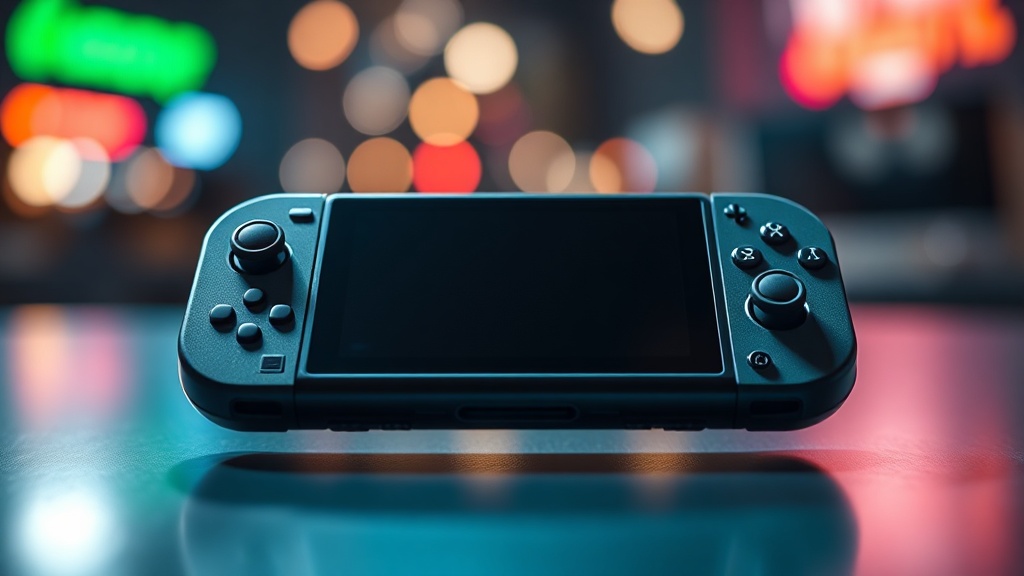
Why You Should Invest in a High Quality Handheld Console

This post explains why investing in high-quality handheld gaming hardware—specifically devices with superior thermal management, high-refresh-rate displays, and robust build quality—is a better long-term value than chasing budget-tier mobile gaming alternatives. You will learn how to evaluate component longevity, the technical necessity of high-performance cooling, and how to avoid the "disposable hardware" trap common in the current handheld market.
The Hidden Cost of Budget Handhelds
The handheld market is currently flooded with "budget" options that look enticing on a spec sheet but fail under real-world thermal loads. When you buy a low-end device, you aren't just saving money upfront; you are often opting into a cycle of thermal throttling and premature component failure. As someone who spends a significant amount of time diagnosing dead motherboards and failing battery cells, I see the fallout of these cheap builds constantly.
Budget handhelds frequently utilize subpar heat pipes and smaller fans to shave a few grams off the weight or a few dollars off the MSRP. While this might look good in a marketing brochure, the reality is that once your CPU hits a certain temperature threshold during a heavy session of Cyberpunk 2077 or Elden Ring, the system will aggressively downclock. This results in erratic frame pacing and stuttering that makes even well-optimized games unplayable. A high-quality device, such as the ASUS ROG Ally or the Steam Deck OLED, invests heavily in thermal headroom to ensure that your performance remains consistent over a three-hour session, not just the first fifteen minutes.
Furthermore, cheap builds often use lower-grade electrolytic capacitors and inferior voltage regulator modules (VRMs). These components are the unsung heroes of your handheld, managing the power delivery to the SoC (System on a Chip). When these parts are low quality, they generate more heat and are more prone to failure under the high-wattage demands of modern AAA gaming. Investing in a premium device ensures that the internal power delivery system can handle the rapid fluctuations in power draw required by high-performance gaming.
Display Technology: Beyond Resolution
Marketing teams love to push resolution numbers, but for a handheld, the quality of the panel and the refresh rate are far more critical to the actual gaming experience. A 1080p screen on a 7-inch display is a standard, but if that panel has poor color accuracy or low brightness, the experience will be lackluster regardless of the resolution. High-quality handhelds often utilize OLED technology or high-nit IPS panels that provide the contrast necessary for visibility in dark gaming environments.
Refresh rates and frame pacing are where the technical truth becomes apparent. A device capable of a 120Hz refresh rate allows for much smoother motion, provided the hardware can actually drive those frames. If you are playing a fast-paced shooter like Apex Legends, the difference between a 60Hz screen and a 120Hz screen is measurable in terms of input latency and visual clarity. Cheap handhelds often stick to 60Hz with mediocre response times, leading to noticeable motion blur and ghosting that can negatively impact your reaction speed.
You should also look closely at the PWM (Pulse Width Modulation) frequency of the display. Many budget handhelds use low-frequency PWM for brightness control, which causes screen flickering. While you might not notice it while staring directly at the screen, it can cause significant eye strain and headaches during long sessions. Premium devices tend to use higher frequency dimming or DC dimming, which is much easier on the eyes during extended play.
Ergonomics and Input Precision
A handheld is a tool, and like any tool, the ergonomics dictate how long you can use it effectively. Many entry-level devices use generic joystick modules that rely on cheap potentiometers. These are notorious for developing "stick drift"—the dreaded phenomenon where your character moves without input. As a technician, I see these modules failing constantly because the internal components are susceptible to even minor amounts of dust or moisture.
When looking for a high-quality investment, look for devices that utilize Hall Effect sensors in the analog sticks and triggers. Hall Effect technology uses magnets rather than physical contact to detect movement, meaning there is virtually no physical wear on the sensor. This significantly extends the lifespan of the controller and eliminates the primary cause of stick drift. Whether you are using a Steam Deck or a more specialized device like those from Ayaneo, the presence of high-quality, durable input components is a non-negotiable for long-term value.
Button tactile feedback is another area where budget devices fail. Cheap membranes feel mushy and lack a definitive "click," which can lead to missed inputs during high-intensity gameplay. High-quality handhelds use precision-engineered mechanical switches or high-grade silicone domes that provide consistent feedback. This isn't just about "feel"; it's about ensuring that when you press a button, the signal is sent reliably and predictably every single time.
The Importance of Software Optimization and Ecosystems
Hardware is only half the battle; the software layer determines how much of that hardware you can actually utilize. A high-quality handheld is usually backed by a robust software ecosystem that allows for granular control over your system. This includes the ability to adjust TDP (Thermal Design Power), control fan curves, and manage GPU clock speeds. Without these controls, you are at the mercy of the factory settings, which are often tuned for a generic "middle ground" rather than peak performance.
Consider the difference between a generic Android-based handheld and a device running SteamOS or a highly optimized Windows build. A dedicated gaming OS provides much better integration for controller mapping, shader pre-caching, and system-level optimizations. Shader pre-caching, in particular, is a critical technical feature. It allows the system to compile shaders in the background, preventing the massive frame drops often seen when a new area of a game is loaded. This is a hallmark of a mature gaming ecosystem and is something you won't find on unoptimized, "off-brand" mobile gaming devices.
- TDP Control: Allows you to limit power draw to save battery or increase it for better performance.
- Shader Pre-caching: Reduces stuttering by preparing graphical assets before they are needed.
- Custom Fan Curves: Lets you prioritize either silence or thermal stability.
- BIOS/Firmware Support: Ensures the hardware remains compatible with new software updates.
Long-Term Value and Repairability
The most significant reason to invest in quality is the total cost of ownership over time. A $250 handheld might seem like a steal, but if it becomes a paperweight in twelve months due to a blown capacitor or a broken joystick, your "savings" disappear. High-quality manufacturers are more likely to provide firmware updates, driver support, and—crucially—replacement parts.
If you are interested in the technical side of how hardware is put together, you might find interest in building a retro gaming console with a Raspberry Pi, which demonstrates how much control you have over your hardware when you choose the components yourself. In the handheld world, that control is often abstracted, but the principle remains: the quality of your components dictates your success.
When a device fails, you want to be able to find a replacement part or a repair guide. Premium brands often have a more established presence in the community, meaning there are more third-party solutions, specialized shells, or even replacement modules available. When you buy a generic, unbranded handheld from a secondary marketplace, you are essentially gambling that the manufacturer will still exist—and provide support—two years from now. In the fast-moving world of handheld gaming, that is a high-risk bet.
Final Technical Checklist
Before you pull the trigger on a new handheld, do not look at the marketing hype. Look at the technical specifications and the community consensus on the following points:
- Thermal Solution: Does it use dual fans? What is the advertised TDP? Is there a history of thermal throttling in user benchmarks?
- Display Specs: What is the peak brightness (nits)? Does it support HDR? What is the response time and refresh rate?
- Input Durability: Are the sticks using Hall Effect sensors or standard potentiometers? Are the buttons mechanical or membrane?
- Battery Chemistry: What is the capacity (Wh, not just mAh)? How does the battery life hold up under a 15W or 25W load?
- Software Maturity: Is there an active community providing custom drivers, shaders, or OS optimizations?
Investing in a high-quality handheld is an investment in your ability to actually play the games you love without technical frustration. Skip the "budget" trap and buy hardware that is built to handle the heavy lifting of modern gaming.